
She Builds Peace Egypt
How climate pressure is reshaping trust in rural Egypt, and how women hold their communities together.
Climate change is also a question of relationships
In 2026, Women for Justice Foundation ran the She Builds Peace Egypt campaign under the theme “Climate Action, Peace Action.” She Builds Peace Egypt is part of the global She Builds Peace campaign led by the International Civil Society Action Network (ICAN) to stand with women peacebuilders.
Through storytelling workshops and an online campaign, researchers, practitioners and civil society actors working with rural communities moved from seeing climate change as a technical, agricultural problem to seeing it as a question of relationships: who carries the burden, who takes part in decisions, and who quietly holds the community together. That shift is where peacebuilding begins.
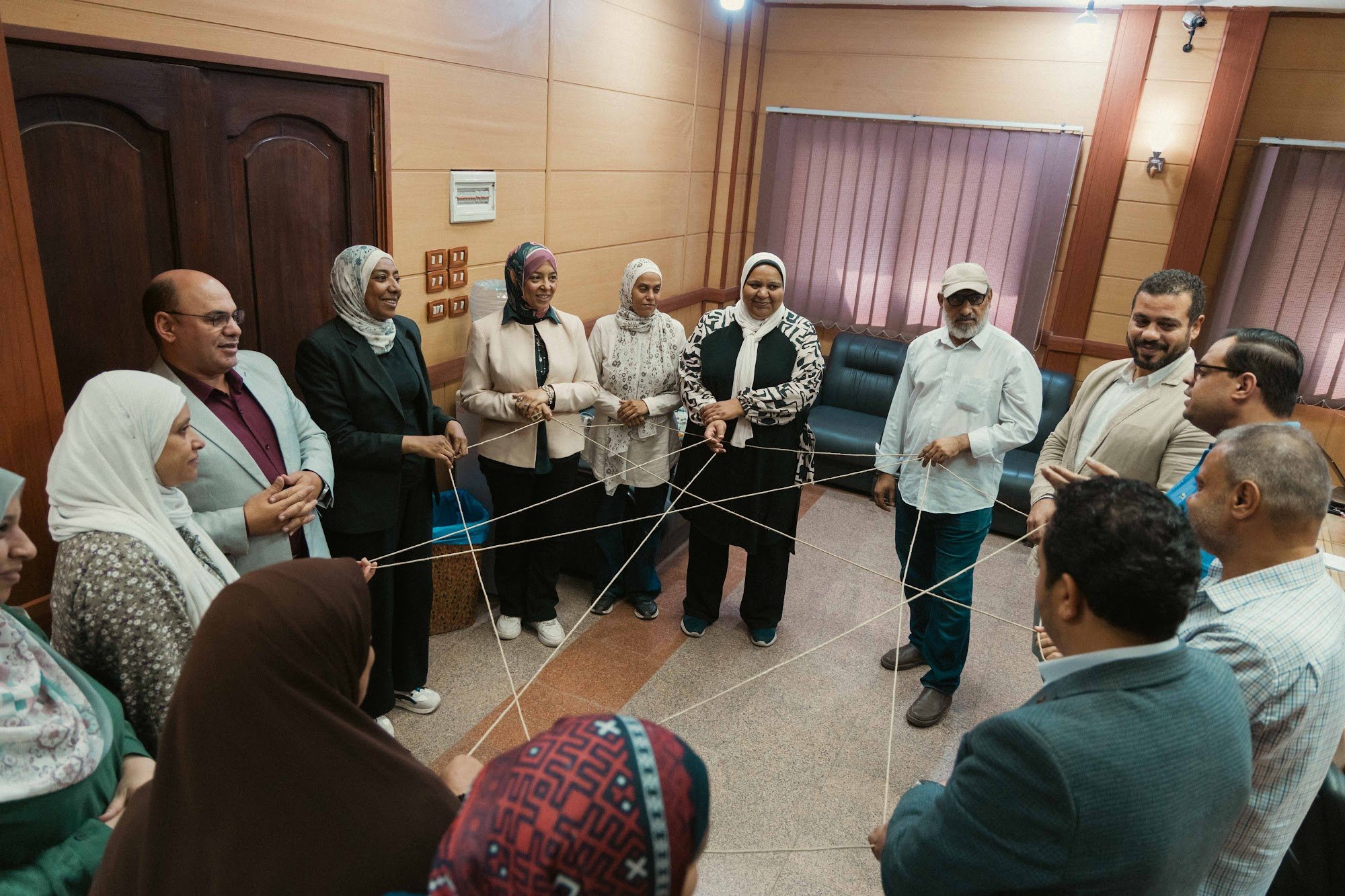
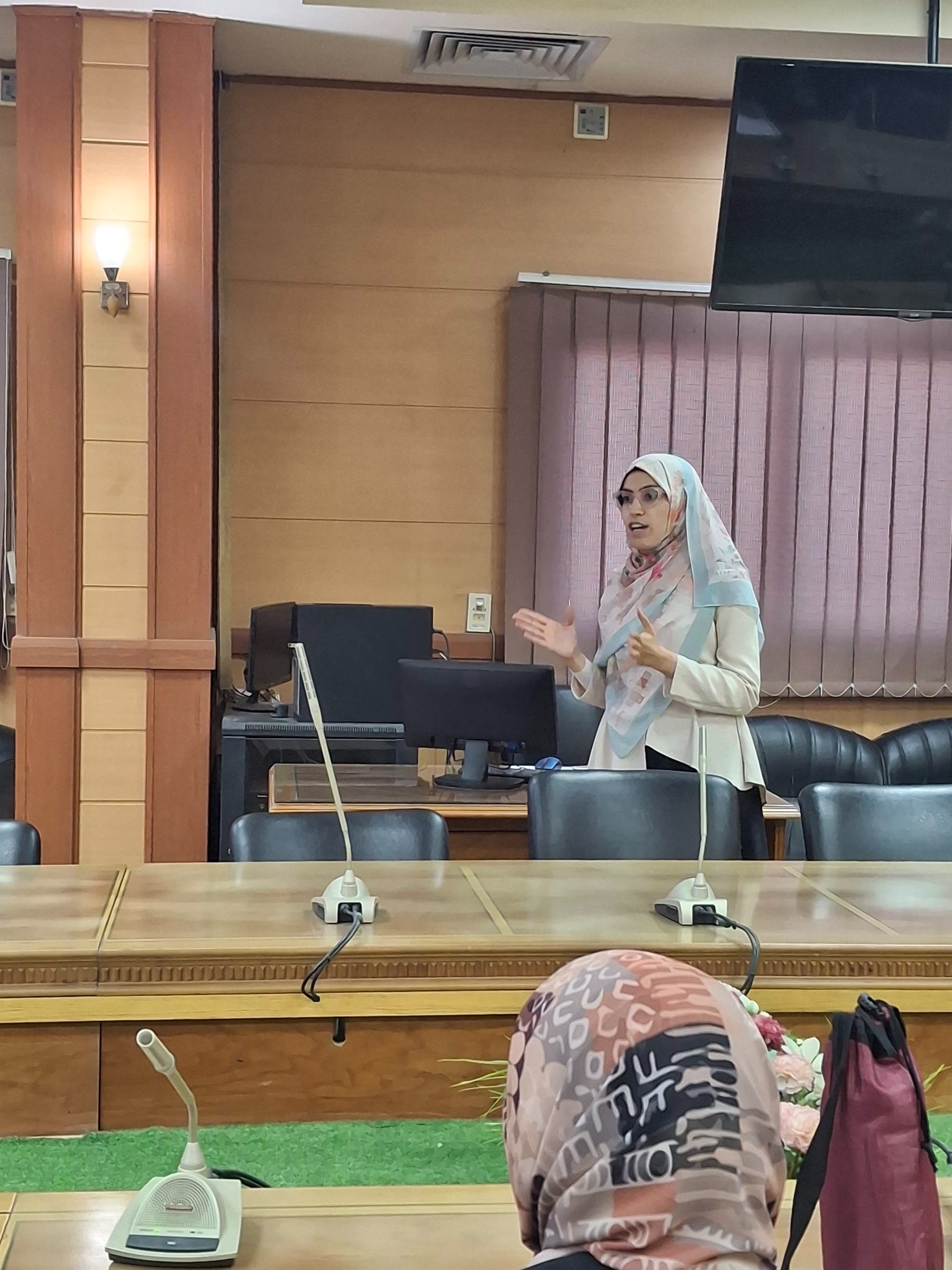
The “Web of Life” activity at the second storytelling workshop (17 September), and the first workshop (15 September 2026).
What we did
- 1
Two storytelling workshops
On 15 and 17 September, agricultural researchers, practitioners and civil society actors shared field experiences where drought, water scarcity or salinity led to local tension. Activities such as the “Web of Life” and the “Tension Map” led into group work on a simple question: who takes part, and who decides?
- 2
An online campaign
From 12 September, awareness posts and six reels recorded by experts and researchers explored how climate change affects social cohesion, women’s leadership in facing climate challenges, and how shared responses can build cooperation.
- 3
A policy brief Coming soon
The workshop findings are being developed into a policy brief, Trust Under Pressure: Climate Change, Social Cohesion and Women’s Roles in Rural Egypt.
What we heard
Climate and resource pressure is already reshaping power, labour and trust in rural Egypt, and women are holding communities together without recognition.
Burdens fall unevenly
As men and young people migrate or take on several jobs, women add extra farm work to their family roles.
Recognising women’s workConsulted is not deciding
Many local actors join the discussion on resources such as fertiliser, but the final decisions are taken elsewhere.
Inclusive decision-makingInvisible peace work
Customary reconciliation, faith leaders and awareness work with rural women and students keep communities together, yet appear in no report.
Recognising local peacebuildersFragile trust
Trust between farmers and officials or researchers is weak, while trust between neighbours spreads good practice quickly.
Safety and inclusive securityWomen as agents
Women farm workers organised to win their unpaid dues, and women experts are leading climate action, including in Upper Egypt.
Women as peacebuildersCrises overlap
Informal building on farmland and the loss of skilled farm labour erode cohesion alongside climate pressure.
An unexpected finding“When climate change hits, the man runs off to find other work. The women make sharbat out of fesikh. If we empower women, they will create social cohesion, because they turn loss into gain.”Workshop participant, translated from Egyptian Arabic. “Making sharbat out of fesikh” is an Egyptian saying: turning something bitter into something sweet.
Trust Under Pressure
Our forthcoming brief draws on the workshops to show how climate change is eroding trust in rural Egypt, and sets out recommendations under four pillars.
- Women’s participationInclude women in decisions on agricultural resources, with real rather than symbolic empowerment.
- Social protectionSecure the income and rights of women farm workers, and build early warning for resource crises.
- Recognition of community rolesBuild community governance into every resource project.
- FundingRequire context and peace analysis before projects are designed, and co-design impact indicators with communities.
Follow the campaign
Watch the reels on our social media, and learn more about the global She Builds Peace campaign.
Support women peacebuilders in Egypt
Your support helps us turn women’s stories into dialogue, research and policy.